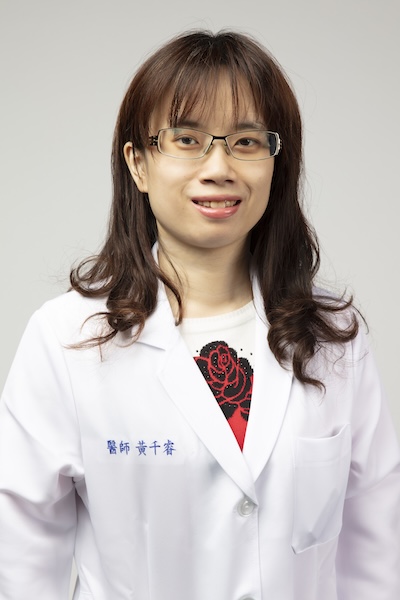
Brief Introduction
Dr. Chien-Jui Huang is an Assistant Professor and Attending Physician in the Division of Gastroenterology and Hepatology at National Cheng Kung University Hospital. She received her MD from National Cheng Kung University in 2012 and her PhD from the Institute of Clinical Medicine, College of Medicine, NCKU in 2021. As a gastroenterologist and interventional endoscopist, her clinical practice centers on advanced therapeutic digestive endoscopy, GI medical oncology, and the diagnosis and treatment of hepato-pancreato-biliary disease, including endoscopic ultrasound with fine-needle biopsy (EUS-FNB) and ERCP.
Dr. Huang's research addresses a central unmet need in pancreatic and biliary tract cancer: the lack of accurate, real-time tools to monitor disease and guide treatment. Her work is unified by the theme of liquid biopsy — minimally invasive blood- and fluid-based biomarkers to detect, monitor, and prognosticate disease that is difficult to track by conventional imaging or serum markers.
The core of this work is circulating cell-free DNA (cfDNA/ctDNA) in pancreatic ductal adenocarcinoma. Addressing the limitations of CA19-9, her research showed that quantitative cfDNA monitoring can predict new distant metastasis earlier than routine CT imaging, as an independent predictor of progression-free and overall survival. By cross-referencing KRAS G12 variants and circulating tumor cell counts, she confirmed the tumor origin of this signal, establishing cfDNA quantification as a practical tool for monitoring during chemotherapy and, prospectively, for guiding surgical decisions after neoadjuvant therapy.
Her interests extend across complementary fronts that reinforce this focus: EUS-guided tissue acquisition optimized for molecular diagnostics, bile-based liquid biopsy in cholangiocarcinoma, and the perioperative and systemic management of pancreatic cancer. Her methodological toolkit spans next-generation sequencing, circulating tumor cell characterization, and survival modeling.
She works within NCKUH's multidisciplinary pancreaticobiliary cancer group alongside colleagues including Yan-Shen Shan, Chia-Jui Yen, Wei-Lun Chang, and Ying-Jui Chao, and is actively involved as an investigator in numerous Phase I/II and Phase III clinical trials in pancreatico-biliary and upper gastrointestinal cancers.
Specialty
- Gastroenterology and Hepatology (internal medicine), with a subspecialty focus in hepato-pancreato-biliary (HPB) disease and GI oncology
- Interventional/therapeutic endoscopy — advanced therapeutic digestive endoscopy, including endoscopic ultrasound with fine-needle biopsy (EUS-FNB) and ERCP for pancreaticobiliary disease
- GI medical oncology — chemotherapy, immunotherapy, and targeted therapy
- Hepato-pancreato-biliary disease — diagnosis and treatment
- General gastroenterology and hepatology — including hepatitis care and abdominal sonography
Education
- Sep 2018 - Oct 2021: PhD / MSc, Institute of Clinical Medicine, National Cheng Kung University
- Sep 2005 - June 2012: MD, College of Medicine, National Cheng Kung University
Experience
- Aug 2024 - Present: Assistant Professor, Department of Internal Medicine, School of Medicine, College of Medicine, National Cheng Kung University Hospital
- Aug 2018 - Present: Attending Physician, Section of Digestive Disease, Department of Internal Medicine, National Cheng Kung University Hospital
- Aug 2016 - July 2018: Fellow, Section of Digestive Disease, Department of Internal Medicine, National Cheng Kung University Hospital
- Aug 2016 - July 2018: Chief Resident, Department of Internal Medicine, National Cheng Kung University Hospital
- Aug 2013 - July 2018: Resident, Department of Internal Medicine, National Cheng Kung University Hospital
- Aug 2012 - July 2013: PGY Resident, National Cheng Kung University Hospital
- June 2011 - May 2012: Internship, National Cheng Kung University Hospital
Selected Publications
- Chien-Jui Huang, Wen-Yen Huang, Ying-Jui Chao, Chien-Yu Chen, Yan-Shen Shan. Elevated Cancer Derived Cell-free DNA Can Predict Distant Metastasis Earlier in Pancreatic Cancer: A Prospective Cohort Study. Ther Adv Med Oncol. 2022, Vol. 14: 1–13.
- Jui-Lin Chang, Chien-Jui Huang, Yi-Cheng Tsai, Nai-Jung Chiang, Yu-Shan Huang, Shang-Cheng Hung, Yan-Shen Shan, Gwo-Bin Lee. An integrated microfluidic system for automatic detection of cholangiocarcinoma cells from bile. Lab Chip. 2024 Jan 17;24(2):375-382.
- Hsueh-Chien Chiang, Chien-Jui Huang, Yao-Shen Wan, Chun-Te Lee, Meng-Ying Lin, Wei-Lun Chang. Identification of Endosonographic Features that Compromise EUS-FNB Diagnostic Accuracy in Pancreatic Masses. Dig Dis Sci. 2024 Nov;69(11):4302-4310.
- Sasi Kiran Boilla, Chien-Jui Huang, Yi-Cheng Tsai, Yan-Shen Shan, Gwo-Bin Lee. Effective isolation of circulating tumor cells via pearl-like, bead-chain magnetic structures on a microfluidic device. Sensors and Actuators B: Chemical. Volume 441, 15 October 2025, 138037.
- Shih-Hung Yang, Chien-Jui Huang, Sz-Chi Chiu, Hsiang-Fong Kao, Li-Chun Lu, Yan-Shen Shan, Sung-Hsin Kuo, Kun-Huei Yeh. Improved survival with adding-on strategy after failure of nanoliposomal irinotecan plus 5-fluorouracil and leucovorin in metastatic pancreatic adenocarcinoma. J Formos Med Assoc. 2025 Mar 4:S0929-6646(25)00101-9.
- Yi-Cheng Tsai, Chien-Jui Huang, Jui-Lin Chang, Nai-Jung Chiang, Yu-Shan Huang, Anandaraju Bandaru, Shang-Cheng Hung, Yan-Shen Shan, Gwo-Bin Lee. Application of CAPTURE Assay for Early Diagnosis and Prognosis in Bile and Blood of Cholangiocarcinoma. JCO Precis Oncol. 2025 Mar:9:e2400728.
- Yu-Ting Su, Yi-Cheng Tsai, Chien-Jui Huang, Nai-Jung Chiang, Anandaraju Bandaru, Shang-Cheng Hung, Yan-Shen Shan, Gwo-Bin Lee. Optimization of a microfluidic system for automated detection of Cholangiocarcinoma cells in bile. Biosens Bioelectron. 2026 Mar 15:296:118330.
Pancreatic ductal adenocarcinoma is a systemic disease even when it appears anatomically localized, and surgery alone is rarely curative. Perioperative systemic therapy has therefore become central to curative-intent management. This lecture outlines the modern framework for treating resectable and borderline resectable disease and the principles that guide clinical decision-making.
After upfront resection, multi-agent adjuvant chemotherapy is the established standard for fit patients, yet a substantial proportion never complete it — a limitation that has motivated efforts to deliver systemic therapy before surgery. For clearly resectable disease, whether a neoadjuvant approach improves outcomes over upfront surgery remains unresolved, with several pivotal randomized trials awaited. For borderline resectable disease, neoadjuvant chemotherapy is now standard, while the role of radiotherapy has become increasingly selective.
Looking ahead, treatment is shifting from an anatomy-based to a biology-informed model. Germline and somatic profiling, CA19-9 dynamics, and circulating tumour DNA / minimal residual disease are positioned to individualize the intensity, sequencing, and selection of perioperative therapy. The lecture closes by considering how these advances can be translated into everyday clinical practice.